What Extreme Heat Really Does to Your Car
Mid-summer represents one of the most demanding periods for vehicle operation. High ambient
temperatures, combined with hot road surfaces and increased driving activity, create conditions
that push many automotive systems beyond their normal operating range. While vehicles are
designed to handle heat, prolonged exposure can accelerate wear in ways that are not always
immediately visible to the driver.
One of the most important systems affected by heat is the engine’s lubrication system. Motor oil
is designed to maintain a specific viscosity range, allowing it to circulate effectively and protect
moving components. However, excessive heat can cause oil to thin, reducing its ability to
provide proper lubrication. Over time, this can increase friction between engine components,
leading to premature wear. Cooling systems are also under increased stress, as they must work
harder to regulate engine temperature during hot weather and stop-and-go traffic conditions.
Vehicle batteries are another component highly
sensitive to temperature. While cold weather is widely
known for causing battery failure, heat can be equally
damaging. Elevated temperatures accelerate the rate
of chemical reactions inside the battery, which can
lead to fluid evaporation and internal corrosion. This
gradual degradation reduces the battery’s ability to
hold a charge and can shorten its overall lifespan
significantly.
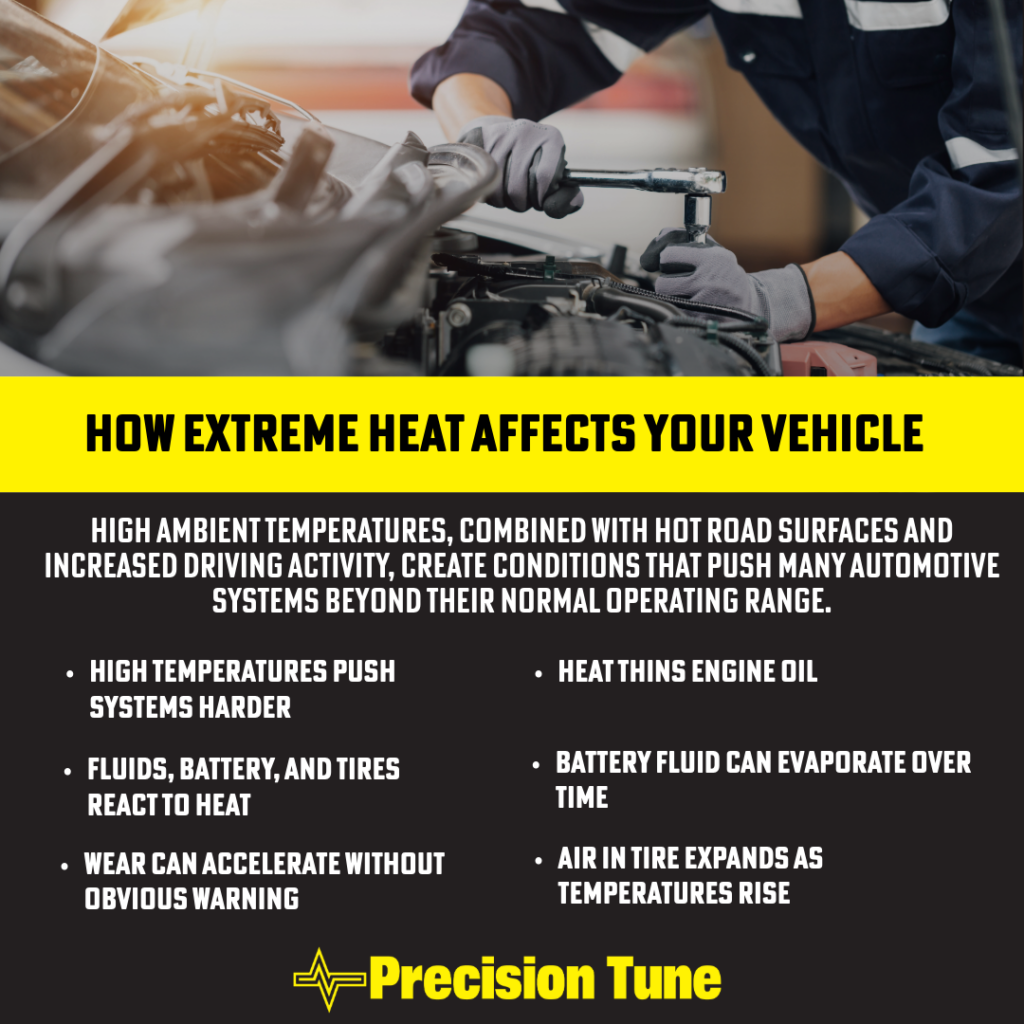
Tires are particularly vulnerable during mid-summer
conditions. As temperatures rise, air inside the tire
expands, causing fluctuations in tire pressure.
Underinflated or overinflated tires can both lead to
uneven wear patterns and reduce overall stability.
Additionally, prolonged contact with hot pavement
increases the rate of rubber degradation. This combination of pressure changes and surface
heat increases the risk of tire failure if not properly managed.
Understanding how these systems respond to extreme heat provides insight into why
mid-summer vehicle awareness is so important. By recognizing how temperature affects fluids,
batteries, and tires, drivers can better anticipate potential issues and maintain consistent
performance during the most demanding months of the year.