The True Cost of Putting Off Vehicle Repairs
Vehicle systems are interconnected, meaning that a single issue can influence multiple
components if left unaddressed. Delaying repairs allows small problems to place additional
strain on surrounding systems, which can lead to more complex and costly outcomes over time.
For example, worn brake pads are a relatively straightforward issue. However, if they are not
replaced in a timely manner, continued use can damage the brake rotors. This transforms a
minor repair into one involving additional parts and labor. Similar patterns occur across other
vehicle systems, where one neglected component leads to additional wear elsewhere.
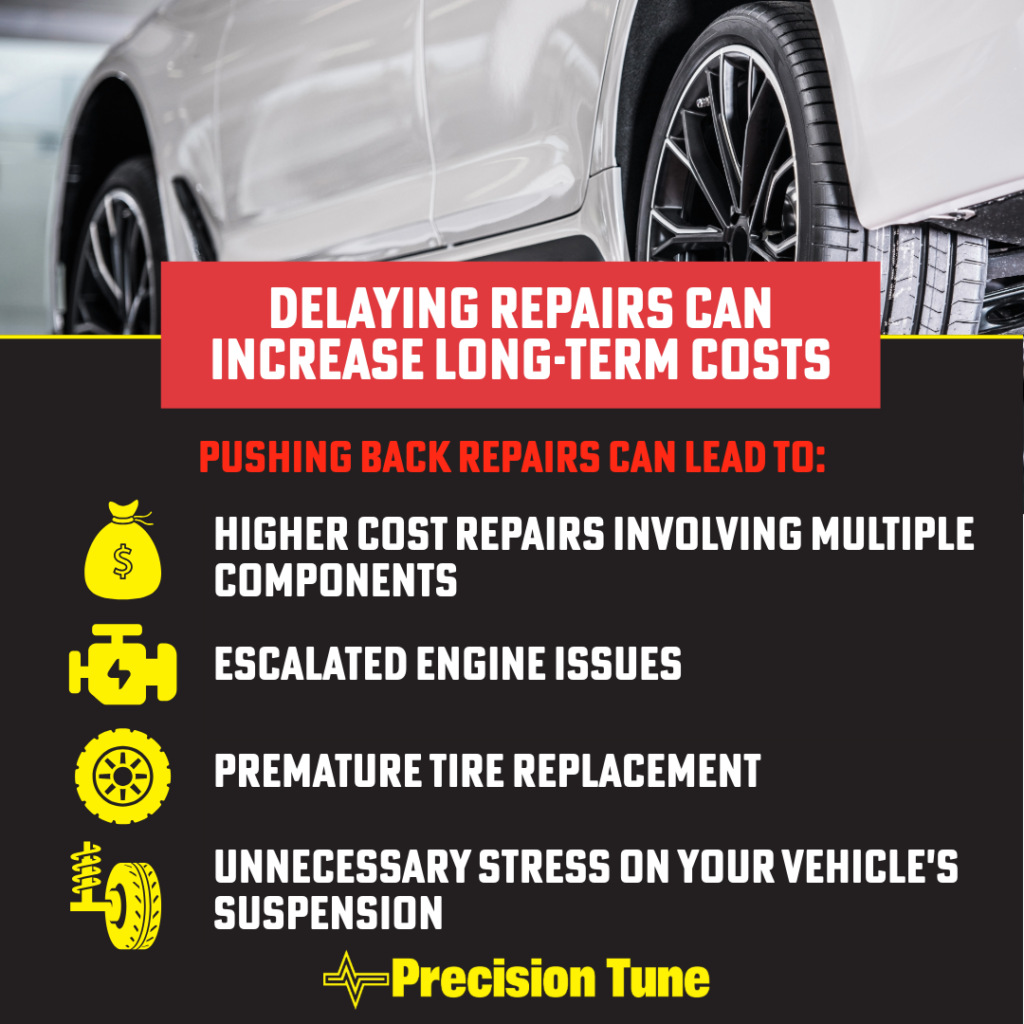
Engine-related issues can also escalate. Minor irregularities, such as sensor malfunctions or
small leaks, may initially have limited impact. Over time, however, they can alter system
performance, reduce fuel efficiency, and contribute to larger mechanical problems. Because
engine systems operate under precise conditions, even small deviations can have compounding
effects.
Another consideration is efficiency. Vehicles operating with unresolved issues often require
more energy to function. This can result in increased fuel consumption and reduced overall
performance. While the initial issue may seem minor, the ongoing inefficiency can contribute to
higher operational costs over time.
There is also an element of predictability. Addressing issues early allows for more controlled
maintenance and planning, whereas delaying repairs can lead to unexpected failures. Sudden
breakdowns not only involve repair costs but can also result in inconvenience and disruption.
Understanding how small issues can grow into larger problems highlights the importance of
timely attention. By recognizing the interconnected nature of vehicle systems, drivers can better
appreciate the long-term benefits of addressing concerns early rather than postponing them.