Why Alignments Matter and When You Need One
Proper wheel alignment plays a major role in how your vehicle drives, evenly your tires wear, and efficiently it uses fuel. After months of navigating winter potholes, ice ruts, and hidden curbs, your suspension angles can shift gradually without obvious signs at first. By spring, however, changes in tire wear, fuel consumption, or steering behavior often become noticeable.
A correct wheel alignment restores the angles of your vehicle’s suspension so that your tires meet the road evenly and predictably. When the alignment is correct, the steering wheel stays centered, the vehicle follows a straight path without drifting, and your tires wear at a normal and even pace. This simple service has a major impact on the way your car handles and how long your tires last.
What a Wheel Alignment Is
Wheel alignment is the process of adjusting the angles of the suspension components that position your wheels. Technicians check and correct three specific angles during an alignment:
Camber: the inward or outward tilt of the wheel when viewed from the front.
Caster: the angle of the steering axis, which affects stability and steering feel.
Toe: whether the wheels point inward or outward when viewed from above.
When these angles are set correctly according to manufacturer specifications, your vehicle handles consistently and safely. If any of these measurements are off, even by a small amount, the tires may not sit flat on the road. That can lead to wear problems, handling issues, or a noticeable pull while driving.
How Winter Driving Causes Misalignment
Winter takes a toll on roads and vehicles alike. Even routine winter driving can affect suspension alignment. Some of the most common causes of misalignment during the colder months include:
- Potholes created by freezing and thaw cycles
- Ice ruts that form after repeated traffic
- Curbs hidden under snow or slush
- Road debris from storms or plows
You may not notice an immediate change after hitting something on the road. Many alignment issues develop gradually. By spring, the effects become more obvious during everyday driving.
Why Alignment Is Essential
Keeping your wheels aligned provides several important benefits that directly affect your wallet, comfort, and safety.
Tire protection
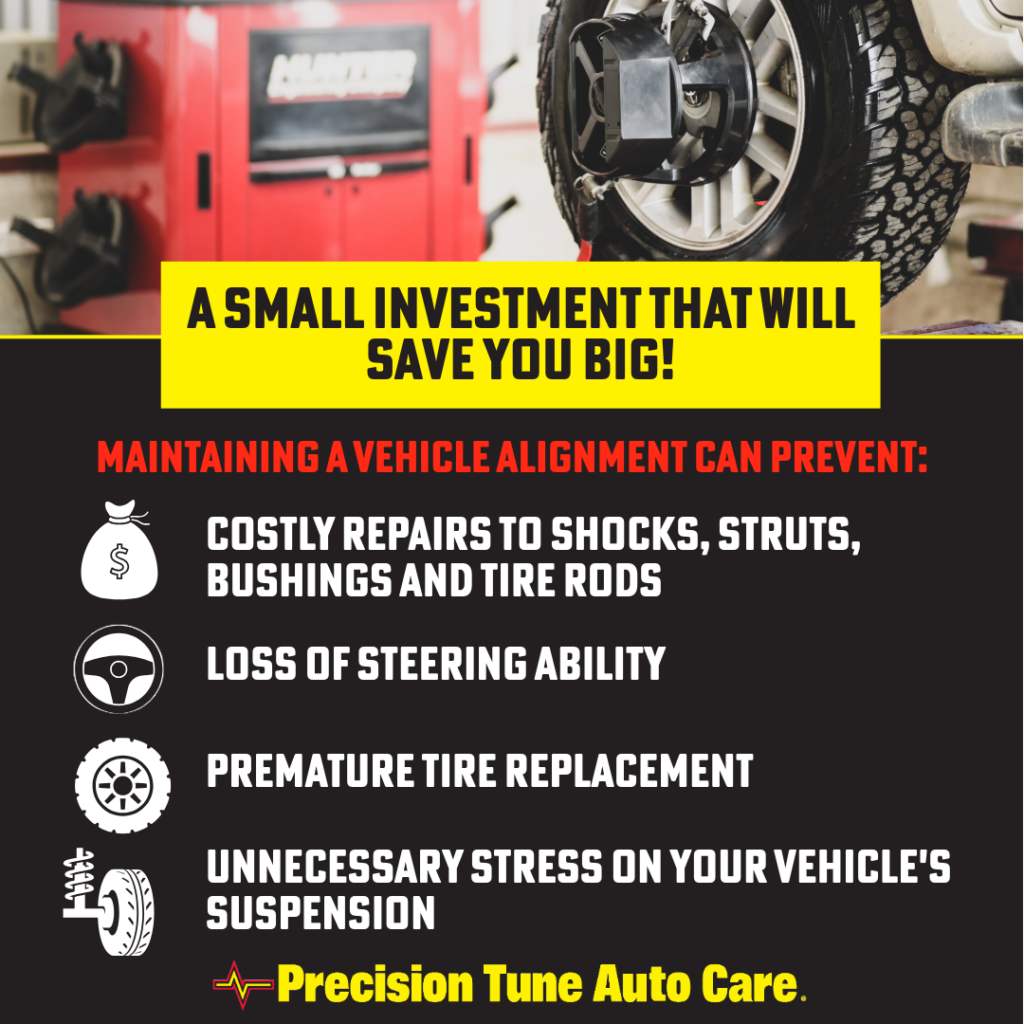
One of the earliest and most visible signs of misalignment is uneven tire wear. When the wheels do not sit squarely on the pavement, certain areas of the tread wear faster. This shortens tire life and leads to replacement much sooner than expected.
Fuel efficiency
Misalignment increases how much resistance your tires create while rolling. When the wheels are not working together, the engine must work harder and use more fuel. Proper alignment reduces this strain and helps improve gas mileage.
Safer handling
Good alignment keeps your vehicle tracking straight, even at higher speeds. It helps prevent wandering, drifting, or pulling to one side. It also improves steering response, which is important for daily driving and emergency situations.
Prevention of unnecessary repairs
If misalignment is left uncorrected, it can place extra stress on suspension components. This may lead to looseness, vibration, or wear on parts that would otherwise last much longer. Early service helps avoid these secondary problems.
Signs Your Vehicle Needs a Wheel Alignment
You do not need to be a technician to notice the early warning signs of misalignment. If you see any of the following changes, it is a good idea to schedule an inspection soon:
- The vehicle pulls to one side
- The steering wheel is off center when driving straight
- Uneven wear on the inner or outer edges of the tires
- A vibration or a loose, unsettled steering feel
- Frequent small corrections needed to keep the vehicle straight.
Any one of these symptoms can indicate that the suspension angles have shifted.
How Often You Should Get an Alignment
Once you recognize these signs, the next step is to understand how often your alignment should be checked. Our experienced technicians recommend having a wheel alignment performed once a year or every 12,000 miles. Routine alignment checks help preserve handling and prevent premature tire wear. A yearly schedule also gives technicians the chance to spot early changes from winter road conditions before they cause more noticeable issues.
Keeping your suspension angles properly aligned is one of the simplest and most effective ways to protect your tires, maintain safe handling, and avoid unnecessary repair costs. Because winter road conditions often cause gradual misalignment, routine inspections ensure small issues don’t develop into bigger problems. Paying attention to early symptoms, such as pulling, uneven tire wear, or off-center steering, helps keep your vehicle performing at its best throughout the year.
Visit your local Precision Tune Auto Care for your next wheel alignment and let our trusted technicians bring your vehicle back to its best. You can also contact us or give us a call at 1.800.GET.TUNE with any questions or for additional information. We take pride in delivering precise, reliable service so you can enjoy a smoother, safer ride every time you hit the road.